1. Introduction
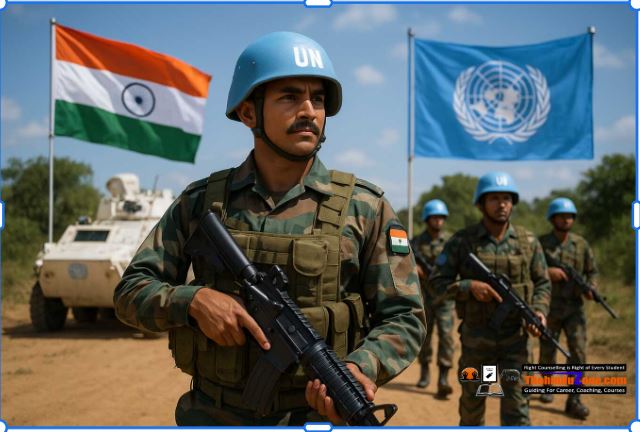
Since gaining independence in 1947, India has consistently advocated the peaceful resolution of conflicts and the maintenance of global order. One of the most visible manifestations of this commitment is the sustained participation of the Indian Armed Forces—Army, Navy, and Air Force—in peacekeeping. From the first United Nations (UN) deployment in 1950 to today’s complex multidimensional operations, India has been among the largest troop‐contributing countries (TCCs). Over 275 000 Indian uniformed personnel have served in more than 50 UN missions, and 179 have made the supreme sacrifice.
Peacekeeping, however, is not a monolithic enterprise. It has evolved from classic observer missions to robust mandates that include civilian protection, disarmament, nation-building, and humanitarian assistance. Correspondingly, the role of Indian forces has expanded, integrating hard-power capabilities with soft-power initiatives such as medical outreach, infrastructure development, and gender empowerment. This note traces that journey, analyses doctrinal and operational nuances, highlights case studies, assesses challenges, and identifies future vectors for India’s engagement.
2. Historical Evolution of India’s Peacekeeping Engagement
2.1 Early Years (1950-1965)
- UNMOGIP (1950-present) – Indian officers began their peacekeeping experience almost at home, with the UN Military Observer Group in India and Pakistan monitoring the ceasefire in Jammu & Kashmir.
- Korea (1950-54) – The 60th Parachute Field Ambulance, commanded by Lt Col A.G. Rangaraj, treated over 200 000 patients and became the first Indian unit to earn UN citations.
- UNEF I, Middle East (1956-67) – Indian infantry battalions in the Sinai were pivotal in stabilising Egypt-Israel relations after the Suez crisis.
- Opération des Nations Unies au Congo (ONUC, 1960-64) – Nearly 4 500 Indian troops saw combat; Brigadier Indar Jit Rikhye eventually served as Force Commander. Air operations, riverine patrols, and healthcare services collectively shaped the “Congo ethos” that still informs India’s peacekeeping culture.
2.2 Consolidation & Expansion (1970-1990)
Through missions in Cyprus (UNFICYP), Lebanon (UNIFIL), and the Middle East (UNDOF), Indian contingents refined interoperability. Simultaneously, the cold-war gridlock limited robust mandates, allowing New Delhi to balance peacekeeping with its non-aligned foreign policy. Notably, Lt Gen Prem Chand commanded UNFICYP, cementing India’s reputation for professional leadership.
2.3 Post-Cold War (1990-present)
With the UN Security Council authorising increasingly demanding Chapter VII missions—Somalia, Rwanda, Sierra Leone—Indian participation diversified:
• ONUMOZ (Mozambique, 1992-94) – The Indian Army’s 1 Madras was instrumental in demobilisation.
• UNOSOM II (Somalia, 1993-94) – Indian Quick Reaction Forces secured the port of Kismayo amid heavy casualties.
• UNAMSIL (Sierra Leone, 2000) – A daring heli-borne operation by 5/8 Gorkha Rifles rescued 222 UN hostages, demonstrating tactical audacity.
• MONUC/MONUSCO (DRC, 2000-present) – India has supplied aviation units, Special Forces, Female Engagement Teams, and Force Commanders, frequently engaging the Lord’s Resistance Army and M23 rebels.
3. Doctrinal Framework
3.1 Principles
India aligns with the three traditional UN peacekeeping principles—consent of the parties, impartiality, and non-use of force except in self-defence or defence of the mandate. Yet Indian doctrine adds two emphases:
- Minimum Force, Maximum Legitimacy – Reflecting Mahatma Gandhi’s moral compass, Indian contingents leverage persuasion, confidence-building, and civil military cooperation (CIMIC) before resorting to kinetic means.
- Developmental Peacekeeping – India views socio-economic assistance as force protection. By building roads, digging wells, or running health camps, troops cultivate goodwill, gather intelligence, and strengthen the peace dividend.
3.2 Training Architecture
Peacekeepers are trained at the Centre for UN Peacekeeping (CUNPK) in New Delhi, which hosts multinational courses on protection of civilians (PoC), child soldiers, and gender perspectives. Simulations replicate scenarios—from Improvised Explosive Device (IED) threats to cyber propaganda—ensuring psychological resilience and cultural sensitivity.
3.3 Inter-service Synergy
Although peacekeeping is predominantly land-centric, India deploys rotary-wing aviation (Air Force) and naval medical personnel (Navy) in littoral missions. Joint exercises such as the tri-service “Indo-UN Peacekeeping Field Training Exercise” (UNITE) integrate Command, Control, Communications, Computers, Intelligence, Surveillance and Reconnaissance (C4ISR) assets and Unmanned Aerial Vehicles (UAVs) to meet contemporary mandates.
4. Operational Contributions: Case Studies
4.1 Eastern Democratic Republic of Congo (DRC)
• Ituri Brigade (2003-05) – Indian forces engineered a fragile peace among Lendu‐Hema militias through inclusive dialogue, establishing the “Bunia model” of community liaison cells.
• Goma-Sake Axis (2013) – When M23 rebels overran Goma, Indian aviation assets coordinated with the UN Force Intervention Brigade, providing real‐time reconnaissance and engaging hostile mortar positions.
• Force Command – Lt Gen Rajeshwar and Lt Gen Otis S. Franks (US) pioneered the co‐command concept, but it was Lt Gen Santoshi who embedded women officers alongside Congolese FARDC liaison teams.
4.2 South Sudan (UNMISS)
India operates one of the largest contingents (≈ 2 400). Highlights include:
• Bor & Malakal Evacuations (2013-14) – Amid ethnic violence, Indian battalions secured PoC sites sheltering 25 000 civilians.
• Engineering Tasks – 20 km of critical road from Wau to Kuajok rehabilitated, reducing travel time by 60 %.
• Female Engagement Teams (FETs) – Deployed in 2016, Indian women officers conduct night patrols and run vocational courses in tailoring, disrupting gender‐based violence cycles.
4.3 Lebanon (UNIFIL)
Operating since 1998, Indian troops manage the Blue Line and run an Ayurveda medical centre—soft power intertwining with robust perimeter defence. The concept has inspired “culture clinics” by other TCCs.
Also read : what is a salary of an IAS 0fficer
5. Civil–Military Cooperation & Soft-power Diplomacy
Indian contingents routinely organise:
- Medical Camps – Thousands of patients receive free treatment; cataract surgeries in Goma became a regional hallmark.
- Veterinary Outreach – Essential in agrarian societies, fostering rural stability.
- Educational Programs – Construction of schools, solar-powered computer labs, and women’s literacy circles.
- Sports Diplomacy – “Football for Peace” tournaments engage youth susceptible to militia recruitment.
These initiatives complement robust patrolling, demonstrating a “holistic security” approach that wins hearts and minds, mitigates spoilers, and strengthens host-state capacity.
6. Gender Mainstreaming
India introduced the world’s first all-female Formed Police Unit (FPU) in Liberia (UNMIL, 2007). Crime rates dropped and local recruitment of women into security forces tripled. Inspired by this success, India now embeds women in infantry contingents, aviation, and staff roles. Gender advisors at battalion level ensure compliance with UN Security Council Resolution 1325 on Women, Peace and Security.
7. Challenges Faced
- Mandate–Resources Gap – Expansive mandates without commensurate assets strain contingents.
- Hostile Environments – IEDs, complex ambushes, and hybrid threats demand advanced ISR and Counter-UAS (unmanned aircraft systems) measures.
- Legal & Political Constraints – National caveats, Status of Forces Agreements (SOFA) ambiguities, and restrictive Rules of Engagement (RoE) can impede proactive measures.
- Psychological Stress – Prolonged exposure to violence, unfamiliar cultures, and isolation precipitate PTSD and depression. India has introduced pre-deployment counselling and post-mission decompression courses but stigma remains.
- Reputational Risks – Allegations of Sexual Exploitation and Abuse (SEA) tarnish mission legitimacy. India maintains a strict “zero tolerance” policy, fast-tracking court-martials and emphasising ethics training.
Also read : India’s Foreign Policy in the Post‑COVID Era
8. Domestic Context: Internal Peacekeeping Analogues
Peacekeeping ethos also reverberates in India’s internal security matrix:
• Counter-insurgency in the North East and Jammu & Kashmir employs population-centric approaches drawn from UN experiences.
• Operation Sahayata – The Army’s flood relief operations mirror CIMIC practices abroad.
Thus, external peacekeeping and internal stability mutually reinforce doctrines, skills, and innovation.
9. Technological Adaptations
• ISR Platforms – Heron and Switch UAVs now accompany infantry patrols for over‐the‐horizon awareness.
• Mobile App “UN-Yodha” – Developed by the Signals Corps, it offers language translation, RoE clarifications, and geo-tagged incident reporting.
• Tele-medicine – Links field hospitals to super‐speciality centres in India, facilitating remote diagnostics.
• Renewable Energy – Solar micro-grids in Mali and South Sudan lower fuel convoy vulnerability.
10. Multilateral Diplomacy & High-level Leadership
Indian officers have served as Force Commanders in Cyprus, Golan Heights, Rwanda, Burundi, and the DRC; Shashi Tharoor once headed UN DPI, while Lt Gen Satish Nambiar was the first Force Commander and Head of Mission, UNPROFOR (1992). India’s candidature for permanent membership of the UNSC is buttressed by such leadership. Furthermore, India champions the “C-34” Special Committee on Peacekeeping Operations proposals—demanding better funding, clear mandates, and triangular cooperation among the UNSC, Secretariat, and TCCs.
11. Humanitarian Assistance & Disaster Relief (HADR) Synergies
Besides blue‐helmeted missions, the Indian Armed Forces have provided non-UN relief in:
• Nepal Earthquake (2015) – Op Maitri deployed 13 Mi-17 helicopters, evacuated 4 700 people, and delivered 940 tons of relief.
• Mozambique Cyclone Idai (2019) – Indian Navy’s INS Suvarna and Air Force C-17s supplied food, water, and medicines.
Such HADR operations reinforce India’s reputation as a net security provider in the Indian Ocean Region (IOR) and align with the “peacekeeping mindset”—prompt response, cultural sensitivity, and coordination with civil authorities.
12. Future Prospects & Recommendations
- High-tech Integration – Accelerate adoption of Artificial Intelligence (AI) for predictive analytics, especially in PoC scenarios.
- Doctrine 2.0 – Update the 2007 “Indian Army Doctrine on Peacekeeping” to incorporate hybrid warfare and misinformation.
- Female Infantry Platoons – Scale-up the pilot to company strength, enhancing community engagement and intelligence collection.
- Regional Training Hubs – Establish satellite CUNPK campuses in Africa via South–South cooperation, exporting Indian expertise.
- Strategic Communication – Proactive storytelling via documentaries, virtual reality (VR) modules, and social media counters malign propaganda.
- Veterans’ Transition – Create a Peacekeepers’ Resettlement Scheme leveraging their unique skillsets for domestic disaster management and UN consultancy roles.
- Carbon-Neutral Camp Concepts – Align with UN Climate Security initiatives, reducing operational footprint and cost.
13. Conclusion
For over seven decades, the Indian Armed Forces have embodied the fusion of danda (force) and dharma (righteousness) in the realm of peacekeeping. From the snow-clad truce lines of Kashmir to the tropical jungles of the Congo and the savannahs of South Sudan, Indian blue helmets have treated the sick, protected the vulnerable, negotiated ceasefires, and on occasion, fought fierce battles to uphold the UN Charter. Their professionalism, cultural empathy, and willingness to operate in the world’s toughest theatres have earned India global respect and moral capital.
Yet challenges persist. The complexity of contemporary conflicts, resource constraints, and geopolitical rivalries strain peacekeeping’s original ideals. India must therefore innovate—doctrinally, technologically, and diplomatically—while staying rooted in its civilisational ethos of “Vasudhaiva Kutumbakam” (the world is one family). Doing so will ensure that Indian peacekeepers continue to be, in the words of former UN Secretary-General Dag Hammarskjöld, “the patient good servants of peace,” bridging the chasm between the horrors of war and the promise of a secure, prosperous, and just world.
Related : best mentorship programme for UPSC 2026